

Guinness Beef Stew (Stove Top)
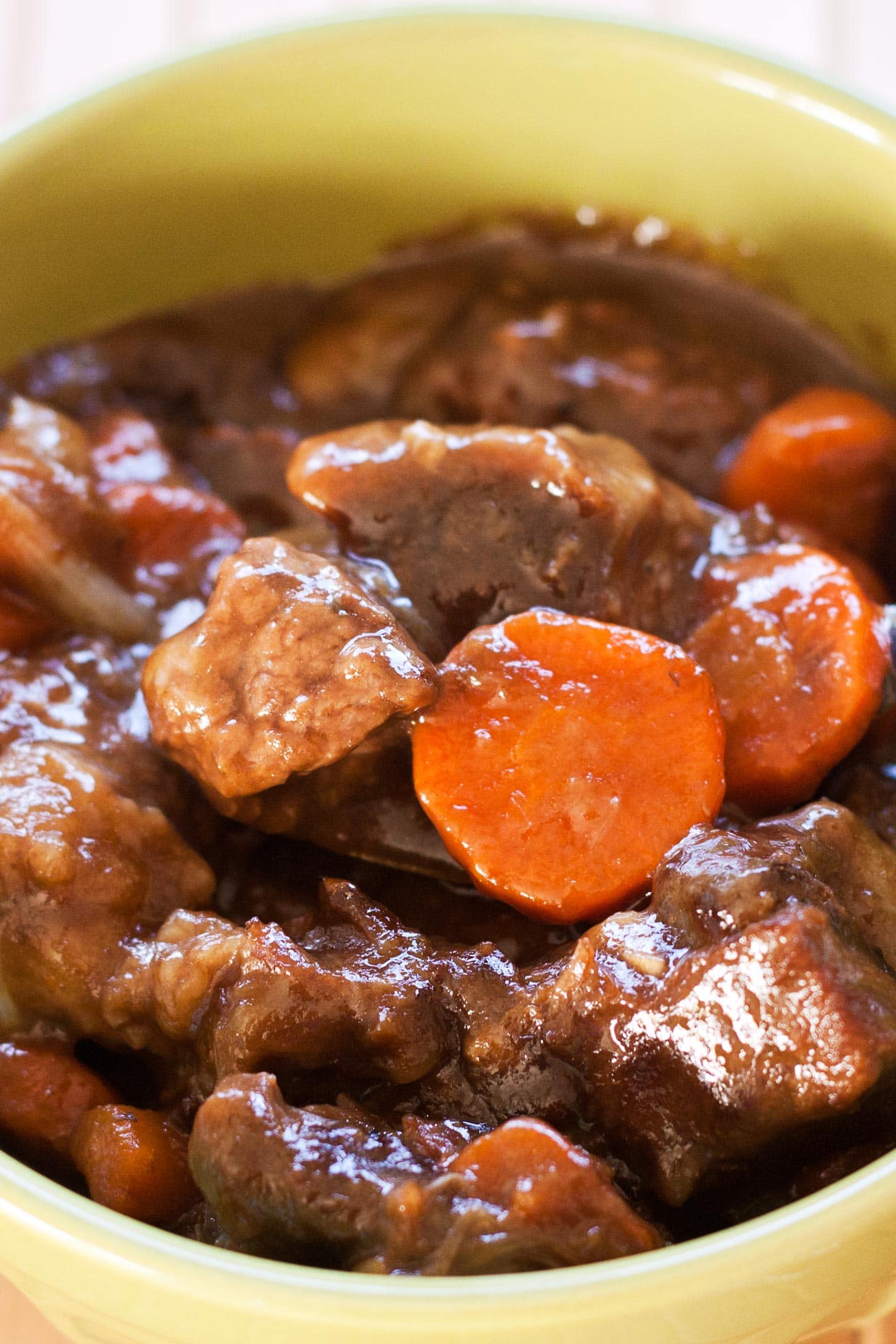
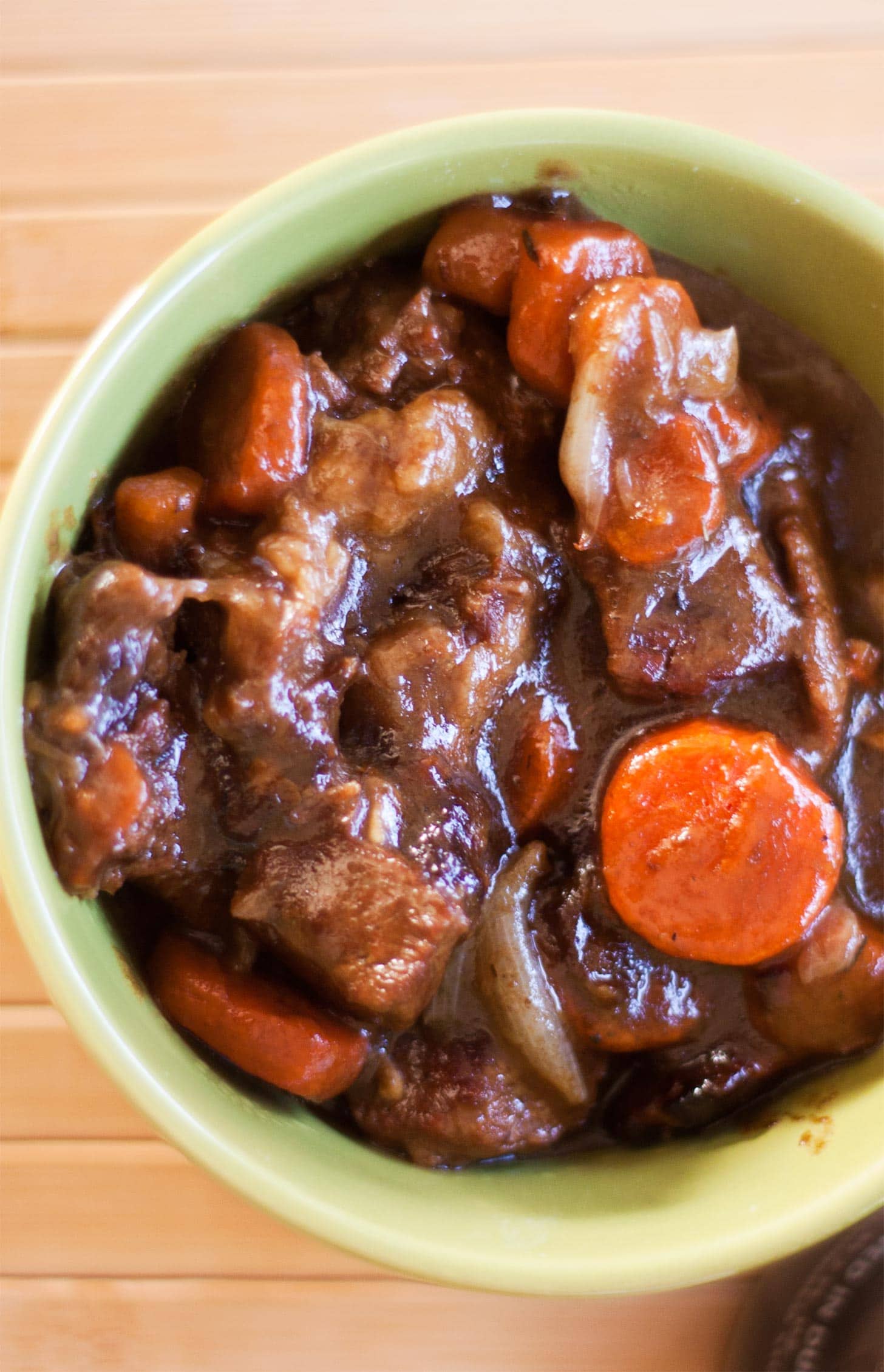
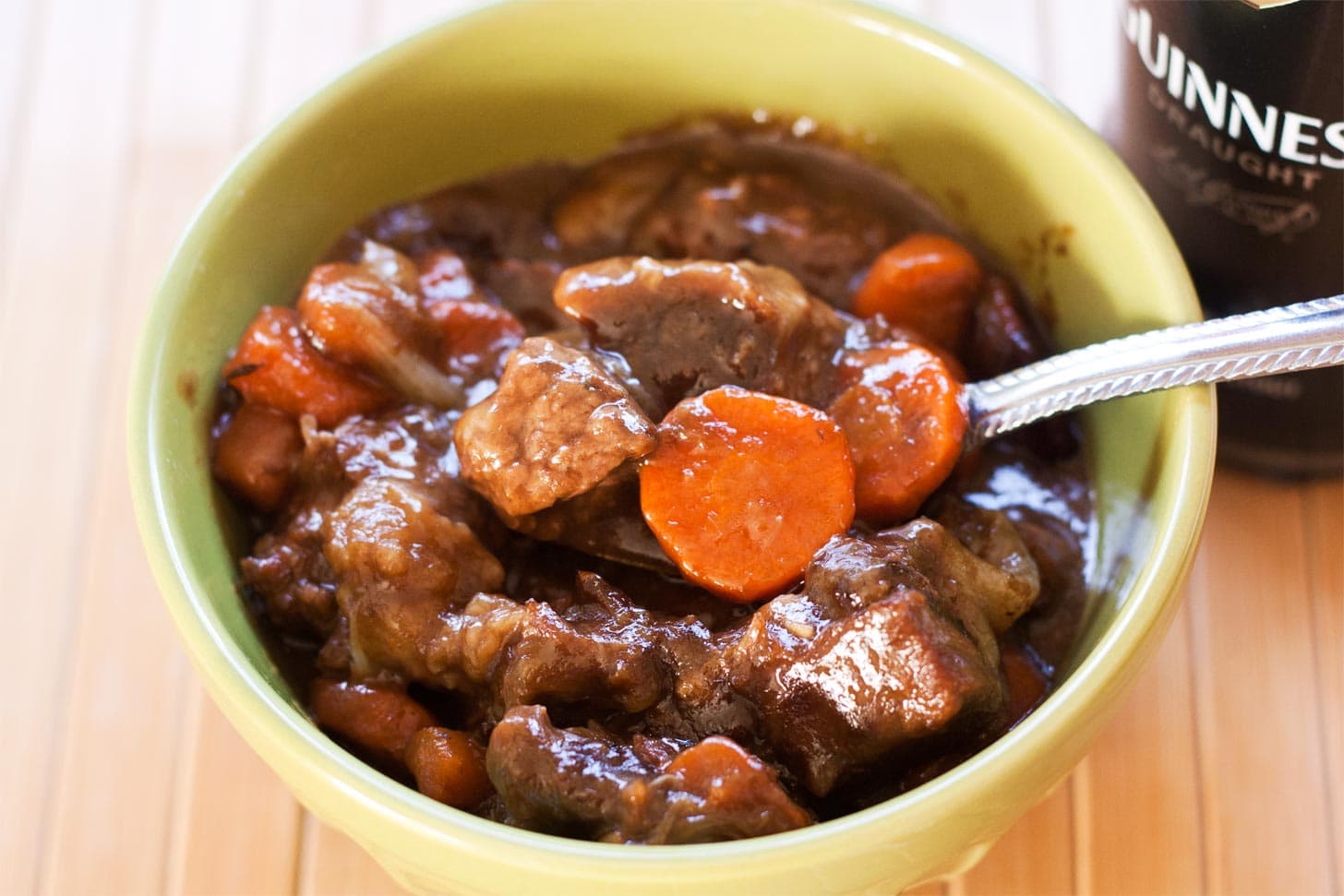
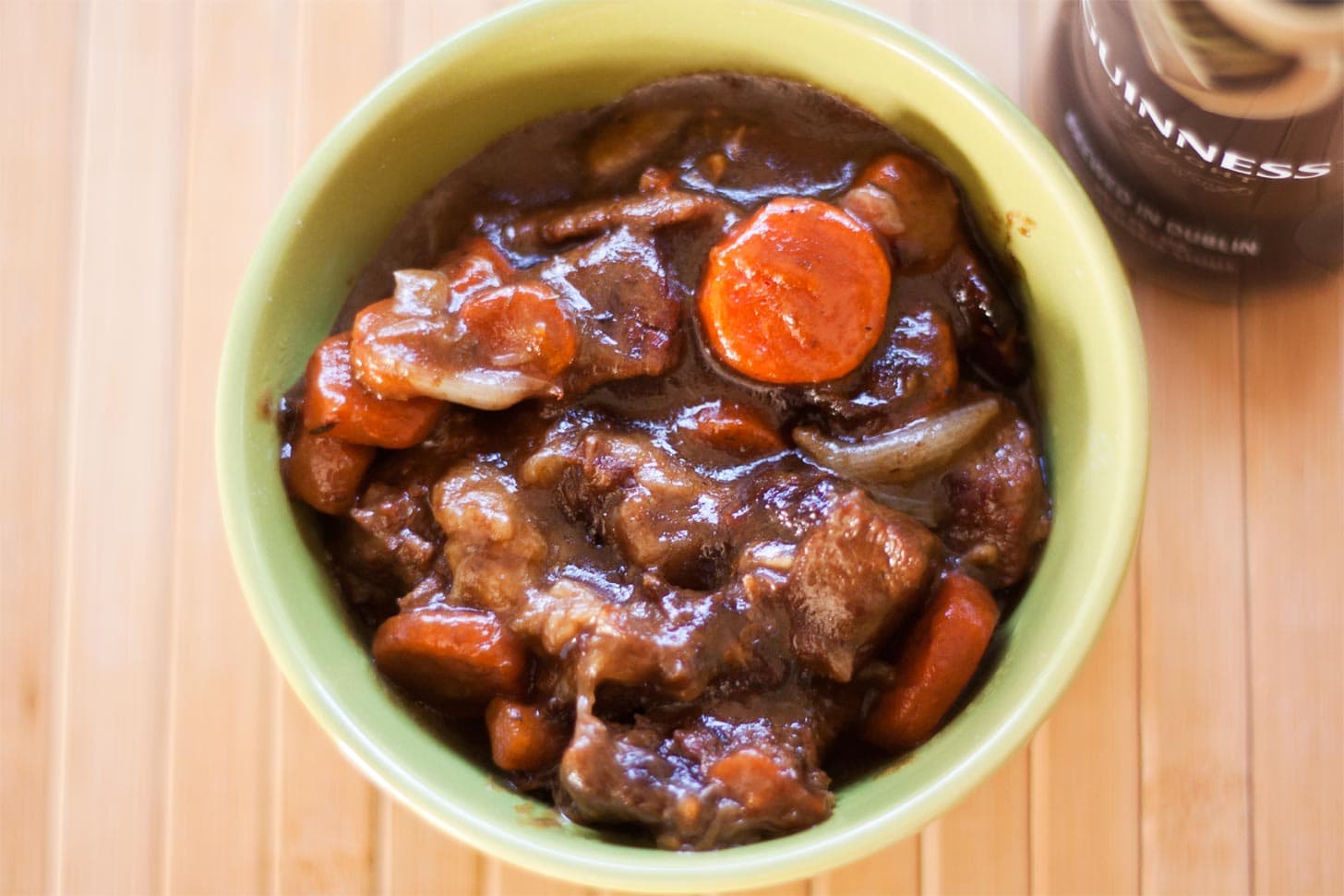
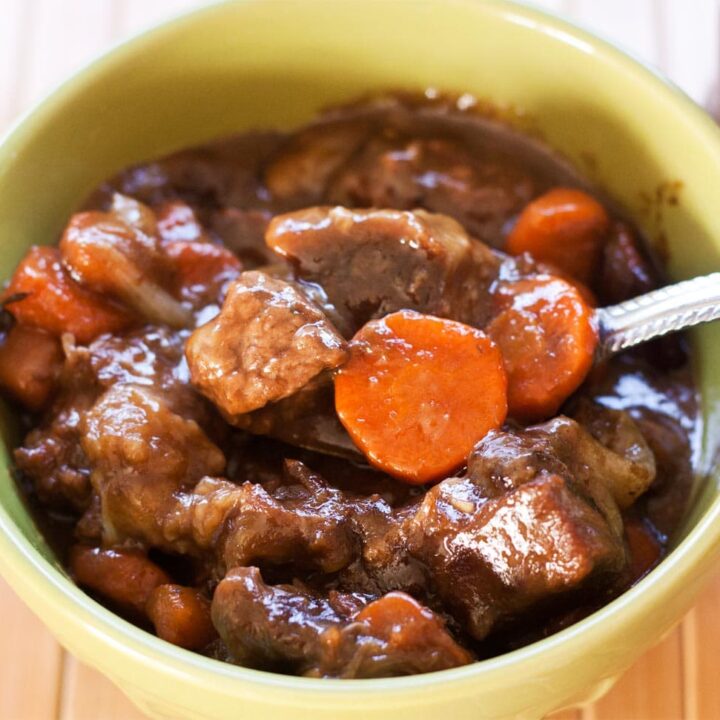
This hearty Guinness Beef Stew is a rich, slow-simmered classic cooked on the stove top with stout beer, potatoes, carrots, and peas and makes the perfect comfort food for winter and St. Patrick’s Day.
As much as I love listening to the rain, I want my sunshine back.
Of course the best way to help cheer any person up is some nice, hearty comfort food such as this stove top Guinness Beef Stew.
It’s a rich homemade Irish beef stew made with potatoes, carrots, peas, and stout beer and cooked all on the stove just like my stove top beef stew.
The stout beer cooks off in the stew, leaving behind its flavor. You certainly won’t get drunk as most of the alcohol evaporates, but there still are trace amounts.
If you don’t want to consume any beer at all, substitute it for more beef stock.
Because of the Irish beer, it’s perfect to serve with Mini Irish Soda Bread or Irish Soda Bread Muffins for St. Patrick’s Day.
This Guinness stout stew does take a a few hours to make given the low and slow cooking method, but you can speed it up a little by following the directions for my Instant Pot beef stew where using a pressure cooker helps cook the meat faster without sacrificing tenderness.
Why You’ll Love This Guinness Beef Stew Recipe
- One pot meal! – Everything is made in a Dutch oven so you only have one pot to wash.
- Mostly hands off cooking! – Once you get the beef stew going, all you have to do is let it simmer with minimal stirring.
- Makes 4 servings! – This hearty beef stew for two leaves you with no or few leftovers.
Ingredients For Guinness Beef Stew
Here’s what you need to cook your Irish beef stew:
- Beef chuck roast: This is the cut of beef preferred for stew (see more below)
- Salt and pepper: Seasoning for your meat
- Vegetable oil: Used to sear your beef
- Onion and garlic: Aromatics to build your base
- Beer: Use a stout beer such as Guinness because it’s robust and can hold up to the beefiness in the dish.
- Beef stock or broth: Liquid needed to cook your stew
- Worcestershire sauce : Adds some umami taste
- Brown sugar: A touch of sweetness to balance the flavors
- Carrots, potato, and peas: Vegetables that pair well with beef
- Thyme or rosemary: A hearty herb that adds freshness
- Lemon juice: Acidity that cuts through the richness
- Cornstarch and water: If your liquid is a little too thin, you may need to use cornstarch to help thicken it for a gravy
What cut of beef is best for stew?
The best cut of beef for stew is boneless chuck roast because it won’t dry out after cooking and is more affordable than a more tender cut. The marbling breaks down during the long cooking process, making the meat fork tender.
I highly recommend cutting a chuck roast yourself. If you buy the pre-cut stew meat, they usually don’t have enough fat on them for stew. You definitely need some beautiful marbling for flavor.
Since this is a beef stew for two recipe, you only need 1/2 pound of meat. However, the smallest chuck roast I could find at the store was 1.5 pounds, which is a lot for 1-2 people!
If your store has a butcher counter, ask them to cut it down for you.
If not, you can divide the meat into 1/2 pound portions when you get home and freeze the rest. That way in the future all you have to do is grab what you need for your next dinner.
How To Make Guinness Beef Stew
Here’s how to make your beef stew with Guinness stout:
- Sear beef in Dutch oven until brown on both sides.
- Cook onion and garlic.
- Whisk in beer, broth, Worcestershire sauce, brown sugar, and salt. Bring to a boil then add beef and thyme.
- Simmer until beef is tender, about 60-90 minutes.
- Add carrots and potatoes then cook another 30 minutes.
- Stir in peas, lemon juice, and cornstarch if needed.
Refrigerate leftover stew in an airtight container for up to 4 days.
Can you freeze Guinness beef stew?
Yes, you can freeze beef stew with some adjustments.
First – If you know ahead of time you’re freezing it, you’ll want to undercook the carrots and potatoes, about 15-20 minutes instead of 30 minutes. The vegetables in stew tend to be softer after freezing, so undercooking will help with that.
If you didn’t plan ahead and freeze it after fully cooking the vegetables, the stew will still be fine. Sometimes I find myself picking out the potatoes if they’re too soft, but you’ll have to use your best judgment when reheating.
If they’re still a bit crunchy after thawing, you can reheat the stew until they’re more tender. It’s better to cook it more later than to overcook it in the beginning.
Second, because I use cornstarch to thicken it, there’s a chance the gravy may separate when reheating.
If you’re meal prepping and not eating the stew right away, you can leave out the cornstarch altogether then add it when reheating.
However, if you already ate dinner and want to freeze some leftovers, you can still freeze it with cornstarch.
If the gravy does separate after reheating, you can take some of the separated gravy, whisk it in a separate bowl with cornstarch, then add it back in. That should smooth the sauce again.
Leftover Guinness Recipes
Because this beef and Guinness stew doesn’t use a whole bottle of beer, you’ll have some extra. If you don’t drink the rest, here are some recipe ideas using leftover beer:
Guinness Beef Stew
This hearty Guinness Beef Stew is a rich, slow-simmered classic cooked on the stove top with stout beer, potatoes, carrots, and peas and makes the perfect comfort food for winter and St. Patrick’s Day.
Ingredients
- 1/2 pound beef chuck roast, cut into 1-inch pieces
- Kosher salt and ground black pepper, to taste
- 1 tablespoon vegetable oil
- 1 small white or yellow onion, quartered
- 4 garlic cloves, peeled
- 1/2 cup beef broth or stock
- 1/2 cup stout beer, such as Guinness (or substitute more broth for non-alcoholic)
- 1 tablespoon Worcestershire sauce
- 1 teaspoon brown sugar
- 2 large carrots, cut into 1-inch pieces
- 1/2 pound (8 ounces) Russet, yellow, or red potatoes, cut into 1-inch pieces
- 1 sprig thyme or rosemary + 1 teaspoon fresh leaves
- 1/2 cup fresh or frozen peas
- 1 tablespoon freshly squeezed lemon juice
- 1 tablespoon cornstarch (optional - see recipe)
- 1 tablespoon water (optional - see recipe)
Instructions
- In a large Dutch oven over medium heat, heat vegetable oil. Season the beef on both sides with salt and pepper then add in a single layer. Cook until brown, about 3–5 minutes. Flip and cook until brown again, about 2–3 minutes. Transfer to a bowl and keep warm.
- In the same pot, add onion and a big pinch of salt. Cook until softened, about 5 minutes. If the pot is dry, add a little more oil. Add garlic and cook 1 minute.
- Gradually stir in broth, beer, Worcestershire sauce, brown sugar, and 1/2 teaspoon salt, scraping up any brown bits on the bottom of the pan. Bring to a boil.
- Once boiling, turn the heat down to the lowest simmer possible Add the beef and any juices from the bowl and herb sprig. Cover and simmer until beef is tender, about 60-90 minutes, stirring occasionally.
- Add carrots and potatoes. Cover and cook 30 minutes or until the vegetables are tender.
- Stir in peas, herb leaves, and lemon juice. Cook until the peas are hot, about 1 minute. Remove the herb sprig.
- Optional - If there's still liquid left in your pot: Mix together cornstarch and water until smooth. Stir into the pot then bring to a simmer. Cook until thickened, about 3 minutes. Let cool for 10 minutes before serving.
Refrigerate leftover beef stew in an airtight container for up to 4 days.
Notes
- Complete your meal with Mini Irish Soda Bread.
- Want to cook your meat a little faster? Check out Instant Pot Beef Stew.
Recommended Products
As an Amazon Associate and member of other affiliate programs, I earn from qualifying purchases.
This post may contain affiliate links. As an Amazon Associate and member of other affiliate programs, I earn from qualifying purchase.
This was great! I subbed beef better than bullion for the stock and just didn’t add extra salt. I also dredged the meat cubes in flour and generous black pepper before searing. I think it added to thickening the sauce. I’ll make this recipe again soon.
Good idea with the better than buillion!
For anyone that doesn’t want alcohol can I suggest that they use 0% Guinness as the taste is the same as the alcoholic Guinness.
Good to know!